Napoleon with Thin Layers and Delicate Cream
A Ø16 cm cake of 12 thin layers with diplomat cream
about 1.5 h hands-on + 12–18 h soaking
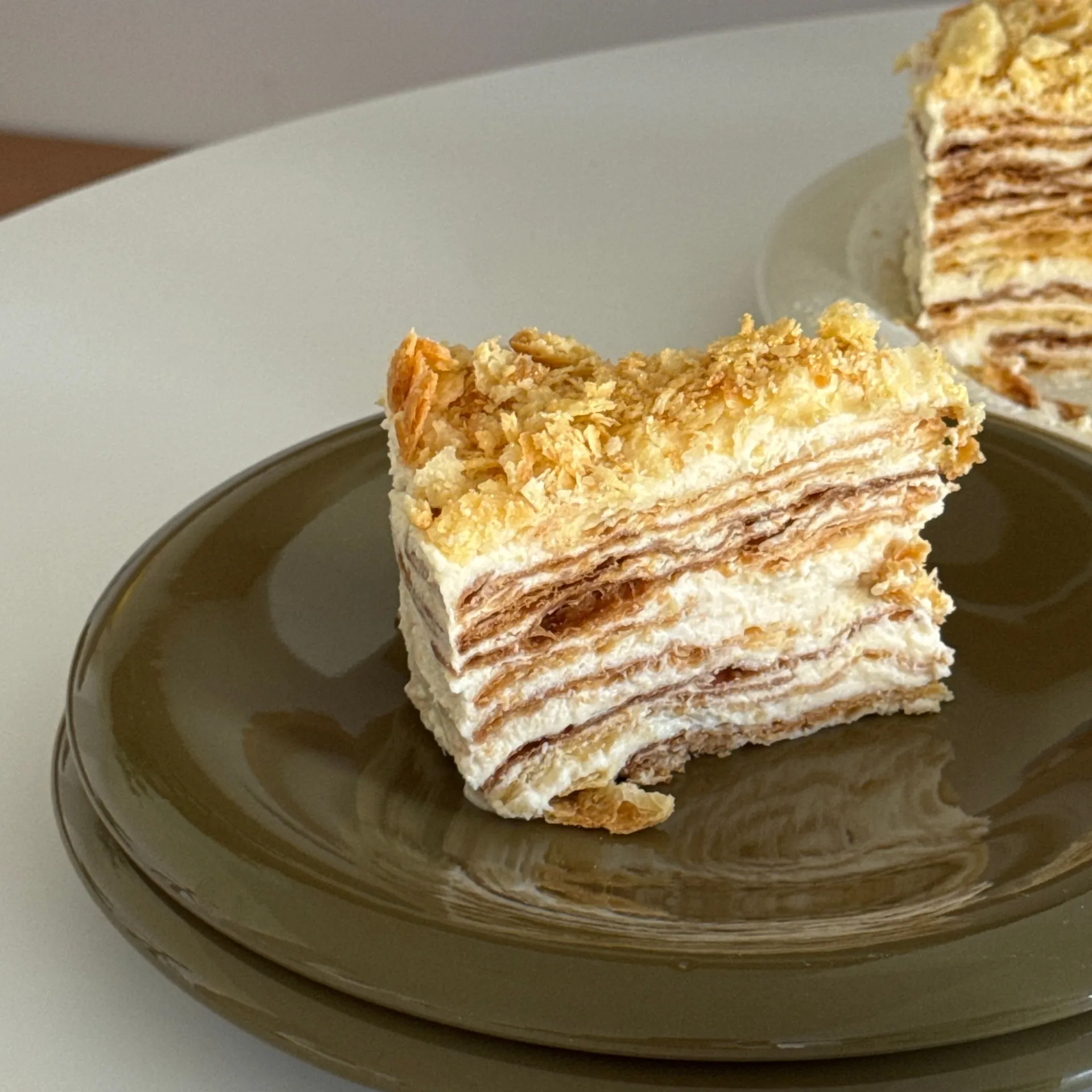
A soft, well-soaked Napoleon with many thin layers and a light cream. The pastry is a rough dough with vinegar, rolled between sheets of parchment and baked one layer at a time; the diplomat cream is set with the smallest possible amount of gelatine — just 3 g — so it stays soft and soaks into the layers properly. The cake asks for time: the dough rests in the cold, and the assembled cake stands in the fridge for 12–18 hours.
Ingredients
12 servings
For the pastry layers
Butter(82.5%, diced and chilled in the freezer for 10–15 minutes)250 g
Wheat flour350 g
Egg yolks(2 pcs)36 g
Whole milk(cold)120 g
Salt3 g
Apple cider vinegar(6%, 1 tbsp; any 6% table vinegar works)15 g
For the diplomat cream
Whole milk300 g
Heavy cream(30–35%, for the custard base)200 g
Egg yolks(6–7 pcs)120 g
Sugar120 g
Corn starch30 g
Gelatin(190–210 Bloom)3 g
Water(cold, to bloom the gelatine)18 g
Salt1 pinch
Vanilla(half a pod or 1 tsp vanilla paste)1 pcs
Heavy cream(30–35%, very cold, for whipping)300 g
Instructions
1. Make the pastry
1
Dice the butter small and put it in the freezer for 10–15 minutes. It should be very cold.
2
Mix the flour with the salt. Add the butter and rub it in quickly with your hands or a paddle attachment until you have coarse, uneven crumbs. Small pieces of butter should stay visible — they are what gives the layers their flake.
3
Separately combine the cold milk, yolks and vinegar.
4
Pour the liquid into the flour and butter and bring the dough together quickly. Do not knead it smooth, and warm it with your hands as little as you can.
5
Flatten the dough into a rectangle, cut it into 4 pieces, stack them and press down lightly. That builds extra layers into the dough.
6
A rest you cannot skip
Wrap the dough in film and refrigerate for 30 minutes. Warm dough cannot be rolled thin, and gluten that has not relaxed will make the layers shrink in the oven.
7
Weigh the dough and divide it into 12 equal pieces, about 64 g each. You can do this all at once; my flat was very warm, so the dough softened quickly and I took out 2–3 pieces at a time and kept the rest in the fridge.
8
Roll each piece straight away between two sheets of parchment into a thin round 19–20 cm across. That works out at about 2 mm thick — the physical limit for 64 g of dough.
9
Stack the rolled rounds with their parchment and refrigerate for at least 1–2 hours.
10
After chilling, move the whole stack to the freezer for 10–15 minutes, until firm. Well-chilled dough holds its shape in the oven and the parchment peels away far more easily.
2. Make the custard base
1
Pour 18 g of cold water over the gelatine and leave it to bloom for about 10 minutes.
2
Combine the yolks with the sugar and corn starch. Whisk well until smooth.
3
In a saucepan combine the milk, 200 g of cream, a pinch of salt and the vanilla. Heat almost to a boil. If you are using a pod, take it off the heat, let it infuse for 10 minutes and warm it again.
4
Pour about half of the hot milk into the yolks in a stream, whisking constantly.
5
Pour everything back into the saucepan.
6
Cook over medium heat, stirring constantly. Once the cream thickens noticeably and the first bubbles appear, cook it for about another minute.
7
Take it off the heat and let it stand for 1–2 minutes: above 85 °C gelatine loses its strength. Then add the bloomed gelatine and stir thoroughly.
8
Transfer the cream to a clean container, cover with cling film touching the surface and chill it completely in the fridge — at least 4 hours.
3. Bake the layers
1
Heat the oven to 200 °C, conventional top and bottom heat. With convection, 180 °C.
2
Take the rounds out of the freezer one at a time so the rest stay firm.
3
Peel the top sheet of parchment off the well-chilled dough. I covered each round with a plate and trimmed the edges. The trimmings can stay on the sheet — they fall away after baking.
4
Prick the round with a fork if you want a flatter surface. If you like a pronounced blistered flake, leave it as it is.
5
Slide the round on its bottom sheet of parchment onto a cold baking tray (an upturned one is convenient) and bake for 7–10 minutes. Start watching at minute six — a thin layer overbakes very quickly.
6
Go by colour above all: the layers should be confidently golden rather than merely dry.
7
Keep all the trimmings for decorating — you will end up with about 200 g.
8
Cool the layers completely on a rack in a single layer: while hot they are very fragile.
4. Make the diplomat cream
1
Whip the very cold 300 g of cream to soft-to-medium peaks. It should hold its shape and stay pliable.
2
Whisk the chilled custard base until smooth. It will be firm after the fridge, which is normal.
3
Add about a third of the whipped cream first and whisk it in — that lightens the base.
4
Fold in the remaining cream with a spatula in one or two additions.
5
You will have around 1050 g of cream. It should be delicate, airy and quite soft. The 3 g of gelatine here is deliberate: it stabilises the cream a little without turning it into a firm jelly.
5. Assemble the cake
1
Dividing the cream
Share the cream out between the layers.
2
A 16 cm ring makes assembly easiest. I had no ring and made one out of foil.
3
Alternate: layer → 75 g of cream → layer → 75 g of cream, and so on.
4
Spread the cream almost to the very edge. Press each new layer down lightly, without compacting it.
5
Be generous with the cream: over the soaking time the thin layers absorb a good part of the moisture.
6
Spread cream over the top layer and cover it with crumbs made from the trimmings.
6. Soaking
1
Cover the cake carefully with cling film, keeping it clear of the crumbs, and refrigerate for at least 12 hours, ideally 12–18.
2
In that time the thin layers soften and turn tender, while the cut still shows plenty of separate layers.
7. Finishing
1
Remove the ring.
2
You can leave the classic finish of crumbs alone, or add fresh strawberries or wild strawberries on top.
Cake at a glance
Diameter: about 16 cm
Layers: 12 pieces, about 2 mm thick
Portions: 10–12
Soaking: 12–18 hours
Yield: about 1.5 kg
What makes it work
12 thin layers
The thinner the layer, the more delicate the cake on the cut
Plenty of soft cream
75 g per layer — the pastry drinks in part of the moisture overnight
A long soak
Give it the full time in the fridge, both for chilling the dough and for soaking the cake
Storage
The finished cake
Up to 48 hours in the fridge
Rolled pastry rounds
Keep in their parchment in the freezer for up to 1 month
Crumbs
Completely cooled trimmings, in an airtight container at room temperature